
Salt damp, also called rising damp, is the damage done to a building when moisture from the ground soaks up into porous brick, stone, mortar and render, carrying salt with it. It happens when the wall’s damp-proof course has failed or was never there. As the water dries out of the wall, the salt crystallises just under the surface, and the pressure of those crystals breaks the masonry apart in layers.
It is common right across Adelaide and country South Australia. Statewide Salt Damp has been treating it since 1991, and this guide covers what we see on the job: what causes it, how to spot it, what happens if it is left, and how it is fixed.
Salt damp or rising damp: is there a difference?
In Adelaide the two names are used for the same problem. “Rising damp” describes the moisture climbing the wall from the ground. “Salt damp” describes what that moisture does: it brings dissolved salts up with it, and the salts do most of the damage. You may also hear it called salt attack.
What causes salt damp?
Most walls in older homes were built with a damp-proof course (DPC): a layer near the base of the wall that stops ground moisture rising. The main cause of salt damp is a damp-proof course that is no longer working, which lets moisture from the ground soak upwards into the porous wall by capillary action, the same way a sponge draws up water.
- The damp course has failed with age. Older slate, bitumen or other damp courses break down over time.
- There was never a damp course, which is common in early homes.
- The damp course has been bridged. Garden beds, paths, paving or driveways built up above it, or render carried down over it, give the moisture a way around.
- Too much water near the walls. Leaking pipes, blocked gutters and downpipes, poor drainage and sprinklers hitting the walls all add to the load.
- Poor sub-floor ventilation, which keeps the base of the walls damp.
Adelaide is particularly prone. Many suburbs sit on salty, reactive soils, hot dry summers draw water out of walls quickly (leaving the salt behind), and a lot of the city’s bluestone, sandstone and red-brick homes were built before modern damp courses.
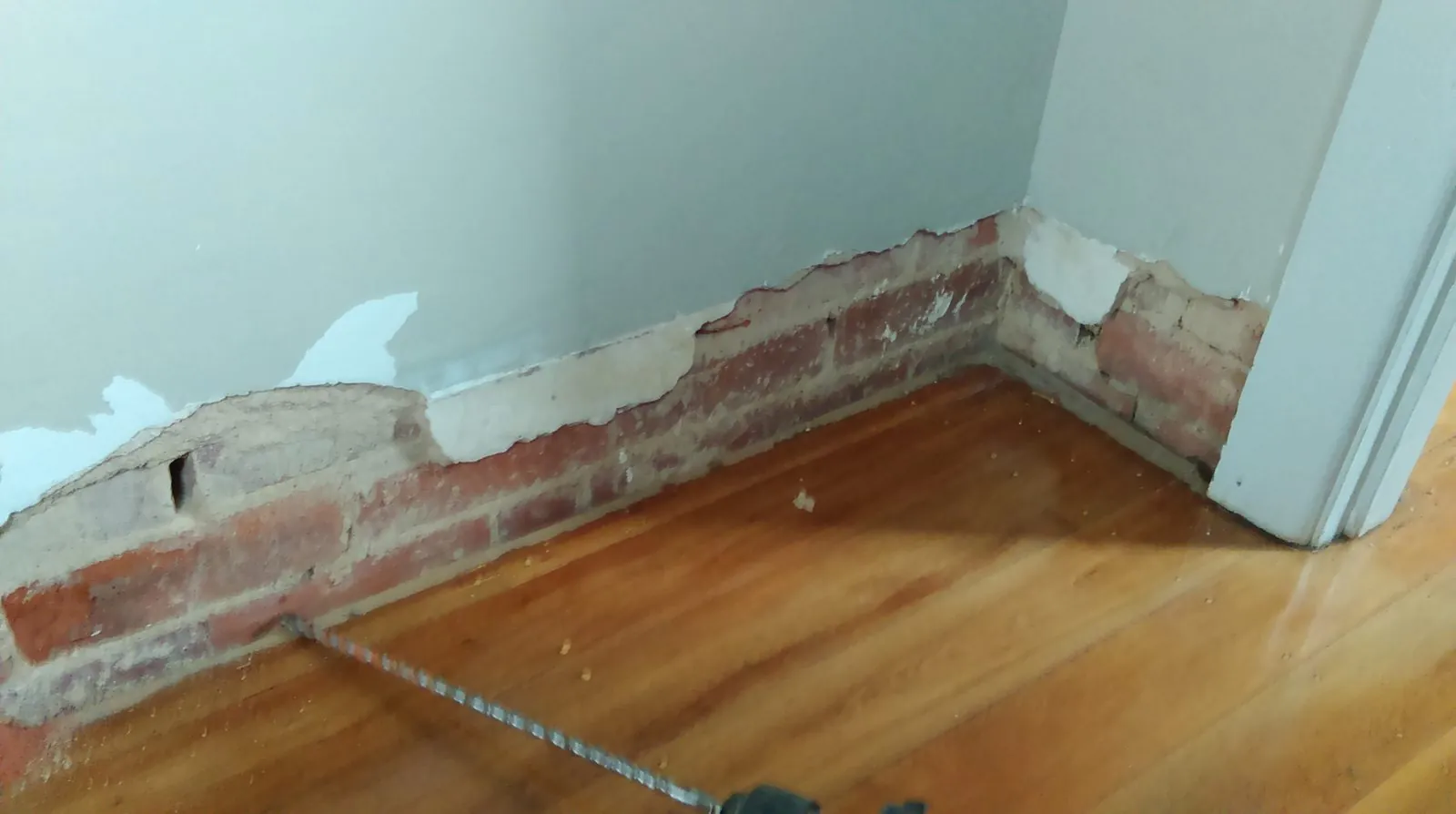
The damage salt damp does
Salt damp damages a building in two ways.
- The damp itself. Plaster softens, paint peels, steel reinforcing and nails rust and timber rots. Damp walls bring mould, musty smells and a slow decay, and damp conditions encourage pests such as termites.
- The salt. As the moisture evaporates, the salts crystallise just beneath the surface, up to the “tide mark” of the damp. The pressure of the crystals growing in the pores breaks the masonry down, so it crumbles and flakes away in layers. Some salts also react chemically with the masonry.
If a damp wall is sealed or rendered over, the damp does not go away. It climbs higher up the wall until it finds somewhere to evaporate.
Signs of salt damp
- White powder or crystals on the wall
- Paint bubbling or flaking just above the skirting
- Plaster that is soft, or render that sounds hollow or falls away
- Mortar turning to sand when you rub it, and crumbling bricks or stone
- A tide mark of staining low on the wall
- A musty smell, mould, or rusting nails and fittings
Not all dampness is rising damp. A leaking pipe, a garden bed against the wall or condensation can look much the same, which is why the first step is always to find the cause. We will tell you honestly what it is.
Can salt damp be fixed for good?
Yes, when the damp-proof course is put back. Improving drainage, clearing vents, fixing leaks and lowering garden beds all help, and are worth doing anyway, but they will not stop well-established rising damp from a failed damp course. To fix the cause, the damp course has to be reinstated, by one of two methods.
Damp course injection
A cheaper and less disruptive method for walls where the brick, stone and mortar are still sound. Holes are drilled along a mortar course near the base of the wall and filled with a silicone damp-proofing cream, which soaks into the mortar and cures into a moisture-repellent damp course inside the wall itself. How damp course injection works
Undersetting
For walls where the bottom courses have crumbled. Short sections of the base of the wall are removed down to the footing, leaving the rest to support it, and rebuilt on a new damp course with matching brick and stone, one section at a time. It removes the worst of the salt-damaged material as well as stopping the damp. How undersetting works
Because Statewide does both, we recommend the one your wall actually needs. Severe cases need undersetting; many walls only need injection.
Questions people ask
What happens if salt damp is left untreated?
It keeps going. The salts carry on breaking down the masonry and the damp keeps rotting timber and blowing plaster, so the longer it is left, the more wall has to be replaced and the bigger the job becomes.
Can I just paint or render over it?
No. Sealers, waterproof paints and hard cement render trap the moisture, and the damp climbs higher up the wall. Repointing old lime mortar with hard cement mortar does the same and can damage the bricks.
Can I fix salt damp myself?
You can deal with some of the causes: keep garden beds, paths and paving below the damp course, fix leaking pipes and downpipes, clear sub-floor vents and keep sprinklers off the walls. How to prevent rising damp. If the damp course itself has failed, it needs to be reinstated properly.
Should I buy a house with salt damp?
Plenty of good older homes have it. Before you buy, check for a damp course and make sure it has no breaks, particularly where the house has been extended, and get the wall looked at so you know which fix it needs and what it will cost.
How much does it cost to fix?
It depends on how much wall is affected, how thick it is, what it is made of and whether it needs injection or undersetting. That is why we come out and give you a written quote for free, and we will beat any written quote. What drives the cost
Get your walls looked at
If you can see the signs above, ring Barry on 0417 818 845 for a free on-site inspection and written quote, anywhere in Adelaide and South Australia.