
How a silicone injection damp course works
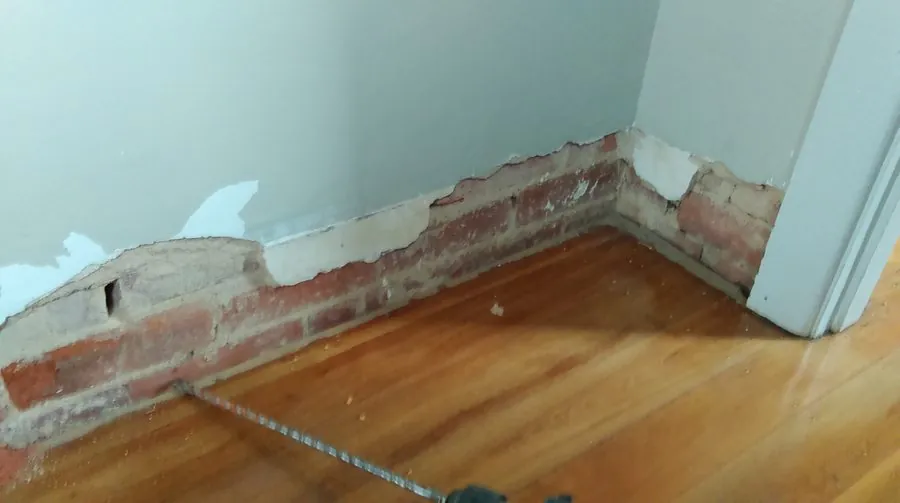
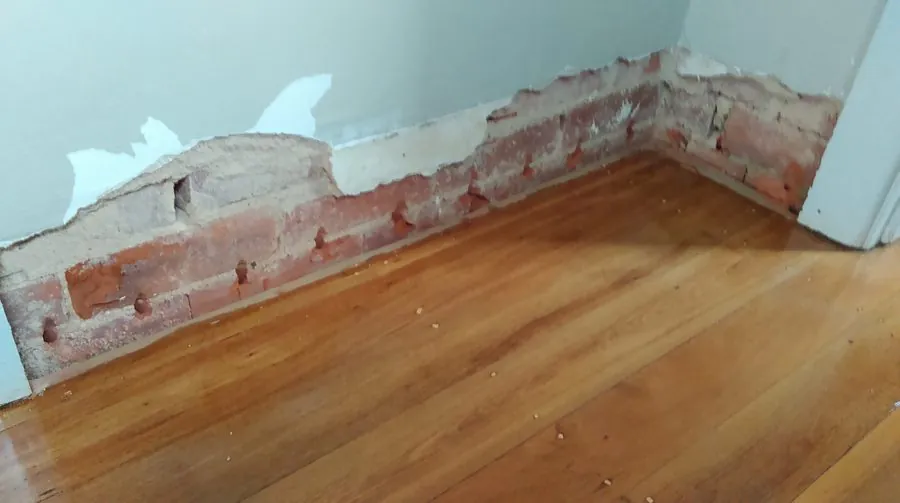
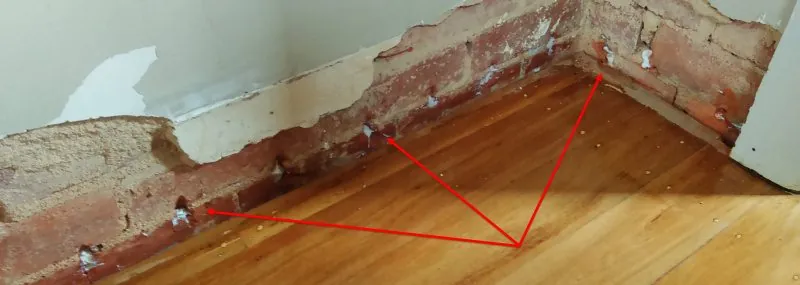
We drill a line of holes into a mortar course near the bottom of the wall and fill them with a solvent-free silicone damp-proofing cream. The cream soaks into the fine pores of the mortar and the masonry around it, then cures into a band of water-repellent silicone inside the wall itself. That band is your new damp course: ground moisture, and the salt it carries, can’t climb past it.
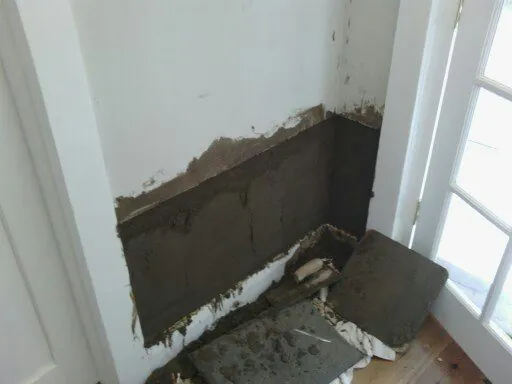
We then patch the holes with matching mortar or plaster so they blend into the wall, and clean up. There is no demolition and very little mess, so it suits a lived-in home.
When injection is the right fix
Injection works when the brick, stone and mortar at the base of the wall are still sound. If the bottom courses have crumbled, or the old damp course has failed and taken the masonry with it, the wall needs undersetting instead. We do both, so we’ll tell you which one your wall actually needs when we come out and look.
Silicone injection has been used in Europe since the 1960s and in Australia since the 1970s. Because it leaves the original wall in place, it is a good fit for heritage and historic homes.
After the injection
Salt damaged plaster and render near the base of the wall usually needs to come off and be replaced once the wall has dried, otherwise the salt left in it keeps blooming through the paint. We’ll talk you through what your wall needs and when it is ready to render and paint.
Questions about injection
How long does an injection damp course last?
The silicone cures into the wall itself, so it doesn’t wear out the way a surface coating does. We back our work with a 30-year guarantee.
How much does damp course injection cost?
It depends on how many metres of wall need treating, how thick the walls are and what they are made of, and how much plaster has to come off. We look at the wall and give you a free written quote, and we will beat any written quote.
Can I inject a damp course myself?
DIY kits are sold, and on a small, sound wall they can work. The hard part is knowing whether injection will do the job, getting the holes at the right height and spacing in the right course, and dealing with the salt left in the plaster. If you’re not sure the wall is sound, get it looked at first: injecting a wall that needs undersetting wastes your money. What you can do yourself